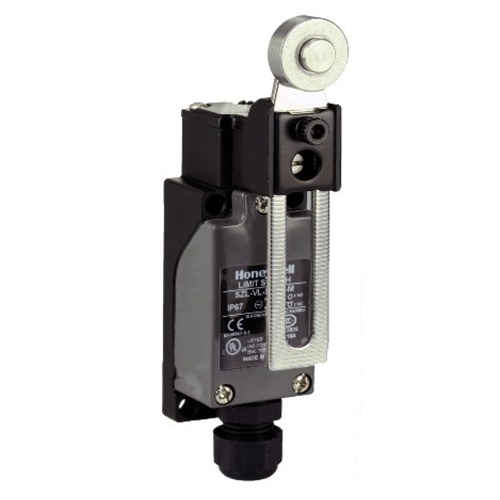
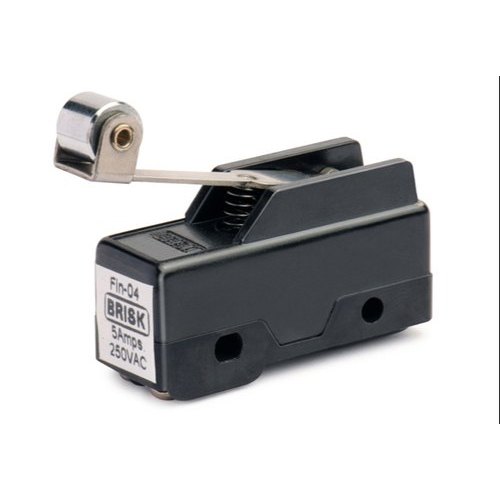
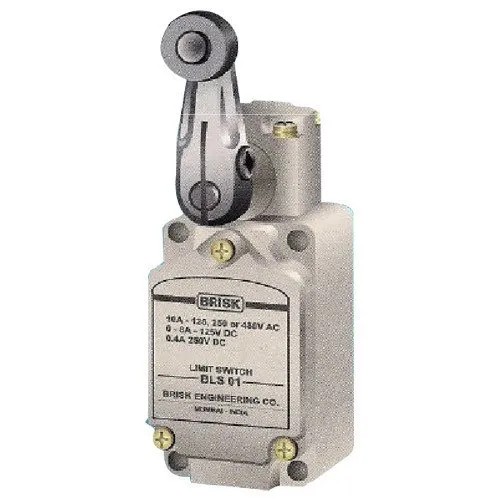
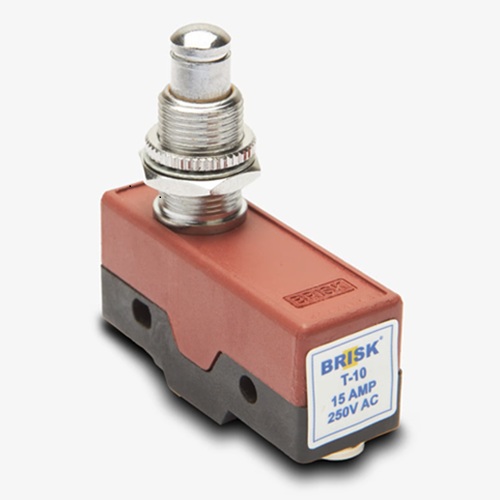
About LIMIT SWITCH
ITEM STANDARD
Rating -10A 500VAC/230VDC
Contact Resistance -25 max.(initial)
Insulation Resistance -100 min. (at 500VDC)
Dielectric Strength -1000VAC, 50/60Hz for 1 minute
Service Life Mechanically -1,000,000 operations min.
Service Life Electrically -100,000 operations min.
Robust Construction for Demanding ApplicationsCrafted from aluminum pressure die-cast and DMC materials, the limit switch guarantees durability and resistance to harsh industrial environments. Its compact, rugged build ensures steady operation and long service life, even under heavy-duty use.
Wide Operating and Temperature RangeThis limit switch supports a broad operating temperature from -20C to +60C, making it suitable for use in both cold storage facilities and high-temperature manufacturing settings without compromising performance or safety.
Maximum Protection and SafetyRated at IP67, the device is dust-tight and can withstand water immersion. Its high voltage (up to 500V) and current capabilities (up to 15 amps) allow the switch to handle demanding electrical loads safely in a variety of industrial setups.
FAQ's of LIMIT SWITCH:
Q: How is the limit switch installed in industrial applications?
A: The limit switch can be easily mounted onto machinery using industry-standard fixtures due to its robust aluminum pressure die-cast body. Installation routines generally involve wiring the device to electrical control circuits and securing it to the actuation point specified for safety or automation control.
Q: What environments are suitable for using this limit switch?
A: With an operating temperature range from -20C to +60C and IP67 protection, this limit switch is suitable for both indoor and outdoor industrial environments, including locations exposed to dust, water, and fluctuating temperatures.
Q: What is the main benefit of the IP67 protection level?
A: The IP67 rating means the limit switch is fully protected from dust ingress and can be safely submerged in water up to a certain depth, ensuring reliable performance in harsh or wet conditions.
Q: When should this limit switch be replaced or serviced?
A: The switch should be regularly inspected as part of standard maintenance, especially if exposed to extreme environmental factors or heavy usage. Replacement is recommended if there are signs of wear, malfunction, or if it fails during periodic electrical testing.
Q: Where can customers source this limit switch?
A: This limit switch is available from multiple channels including distributors, exporters, manufacturers, service providers, suppliers, and traders. Ready stock ensures prompt availability for urgent requirements.
Q: What processes benefit most from using this type of limit switch?
A: Automated systems, conveyor lines, safety interlocking, and position detection processes benefit greatly from the precise and reliable actuation provided by this switch, enhancing operational reliability and safety.






 Send Inquiry


 Send Inquiry


 English
 Spanish
 French
 German
 Italian
 Chinese (Simplified)
 Japanese
 Korean
 Arabic
 Portuguese